Draft National Tourism Policy 2026: tax holidays, a tourism fee and night safaris
The government has published a 57-page draft National Tourism Policy 2026 and held a stakeholder workshop on 26 November to finalise it. It proposes tax holidays in special tourist zones, a 1–2 percent tourism fee on air tickets and hotel bills, e-visas, carrying-capacity limits and a night-tourism policy. What is in it, and the questions it leaves open.
Bangladesh is rewriting its tourism rulebook. The Bangladesh Tourism Board (BTB) published a 57-page draft National Tourism Policy 2026 on its website on 19 November, and on Thursday, 26 November, government officials, tour operators, hotel owners, researchers and trade bodies met at Hotel InterContinental Dhaka for a workshop to finalise it. The workshop was organised by BTB with the Ministry of Civil Aviation and Tourism, according to participants' posts. The new policy will replace the National Tourism Policy of 2010.
The draft sets out a clear division of labour: the government acts as "regulator" and "facilitator", and the private sector as the "engine of growth". Its stated vision is an inclusive, environment-friendly, world-class and technology-driven tourism ecosystem that makes a visible contribution to GDP. Here is what it proposes.
Money: tax holidays and a tourism fee
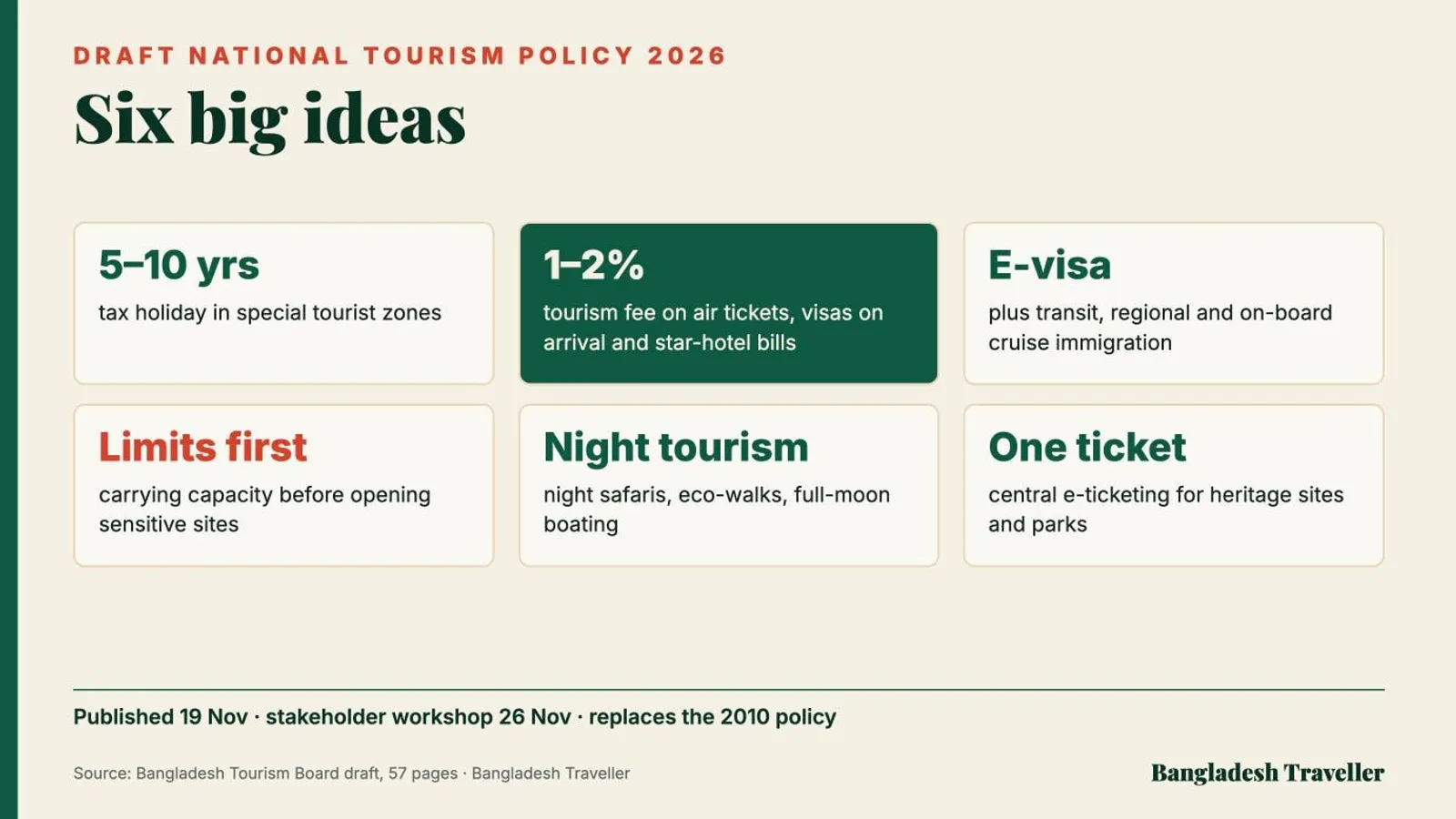
- Special tourist zones. Special or Exclusive Tourist Zones to attract public-private partnerships and foreign direct investment. Investors there would get a 5–10 year tax holiday, duty-free import of equipment and every licence through a single gateway, modelled on Thailand's Board of Investment.
- Export-style incentives. Tourism businesses that earn foreign currency would get benefits similar to export industries, plus soft loans, tax and duty breaks, and incentives for eco-resorts and glamping in off-beat areas.
- A Tourism Development Fund. An autonomous fund, run by a board of governors, for international marketing, branding and support to the industry in a crisis. Besides a one-off government seed grant, it would be fed by a 1–2 percent "tourism promotion fee" on international air tickets, visas on arrival and star-hotel bills, and a share of entry fees and leases at major heritage and nature sites.
- Investment strategy. A National Tourism Investment Strategy to speed up investment.
Getting in and getting around
- Visas: e-visas for source markets, a better visa on arrival, and new categories such as transit, third-party and regional visas. Cruise passengers would clear immigration and customs on board.
- Regional airports: links through Cox's Bazar, Saidpur, Rajshahi and Sylhet to bring visitors directly from north-east India, Nepal, Bhutan and Thailand, easing pressure on Dhaka and Chattogram.
- Circuits: regional tourism circuits instead of crowding single spots, such as an archaeological circuit in Bogura and Sirajganj, a river and heritage circuit in Manikganj, and Jamalpur's "hills, heritage and heroes". Four-lane roads to circuits, luxury tourist trains and cruise services are also proposed.
Digital tourism
- A "Digital One-Stop Tourism Solution" covering planning, booking, payment, safety, complaints and feedback on one platform, plus a central mobile app.
- A central ticketing system, online or at counters and kiosks, for heritage sites and national parks, "not through middlemen".
- Fully digital licensing and approvals, AI for crowd management and digital guidebooks, and AR, VR and light-and-sound shows at historic sites.
Limits and safety
- Carrying capacity: before any environmentally sensitive area is declared or opened as a tourist site, its environmental and social carrying capacity must be assessed through scientific research. The draft names Saint Martin's, the Sundarbans, Bandarban and Jaflong as places where over-tourism and unplanned business are hurting responsible tourism.
- Environment: plastic-free tourism, renewable energy and waste management at hotels and resorts, and eco-friendly design in protected areas.
- Safety: a National Tourism Safety and Security Framework, more trained Tourist Police, separate safety protocols for beaches, hills, forests, islands, rivers and heritage sites, CCTV and lighting at sites, and mobile and GPS coverage in remote areas.
- Conduct: a mandatory national code of conduct for both tourists and service providers, and strict surveillance against drugs, human trafficking and "immoral activities" under the cover of tourism.
- Laws: amendments to the Bangladesh Tourism Board Act 2010 and the Tour Operators and Tour Guides Act 2021.
New products
- Night tourism: a separate "night tourism policy", run jointly with the culture ministry. Ideas include night safaris in silent electric vehicles on fixed routes at the Gazipur and Cox's Bazar safari parks, small-group "night eco-walks" with trained guides in the buffer zones of Sreemangal and Satchari, full-moon boating on Kaptai Lake, stargazing in the hills and haors, and light-and-sound shows at heritage sites.
- Homestays: a legal and institutional framework for homestays so that tourism income reaches local people directly.
- Themes: eco, water and river, heritage, agro, cruise, MICE, education and community-based tourism, with universal access for women, children, older people and people with disabilities.
- Research: a research cell at BTB.
Questions for the final version
- Who pays the fee? A 1–2 percent charge on air tickets and hotel bills falls on travellers. The final policy should say how the fund's spending will be reported.
- Limits or night safaris? The draft makes carrying-capacity studies mandatory, but also proposes night activities in protected forests and buffer zones. It should say which comes first.
- Numbers and deadlines. In the sections we reviewed, the draft sets out many ideas but few numerical targets, budgets or timelines.
- Feedback from the public. The draft is online, but no public process for comments beyond invited stakeholders has been announced.
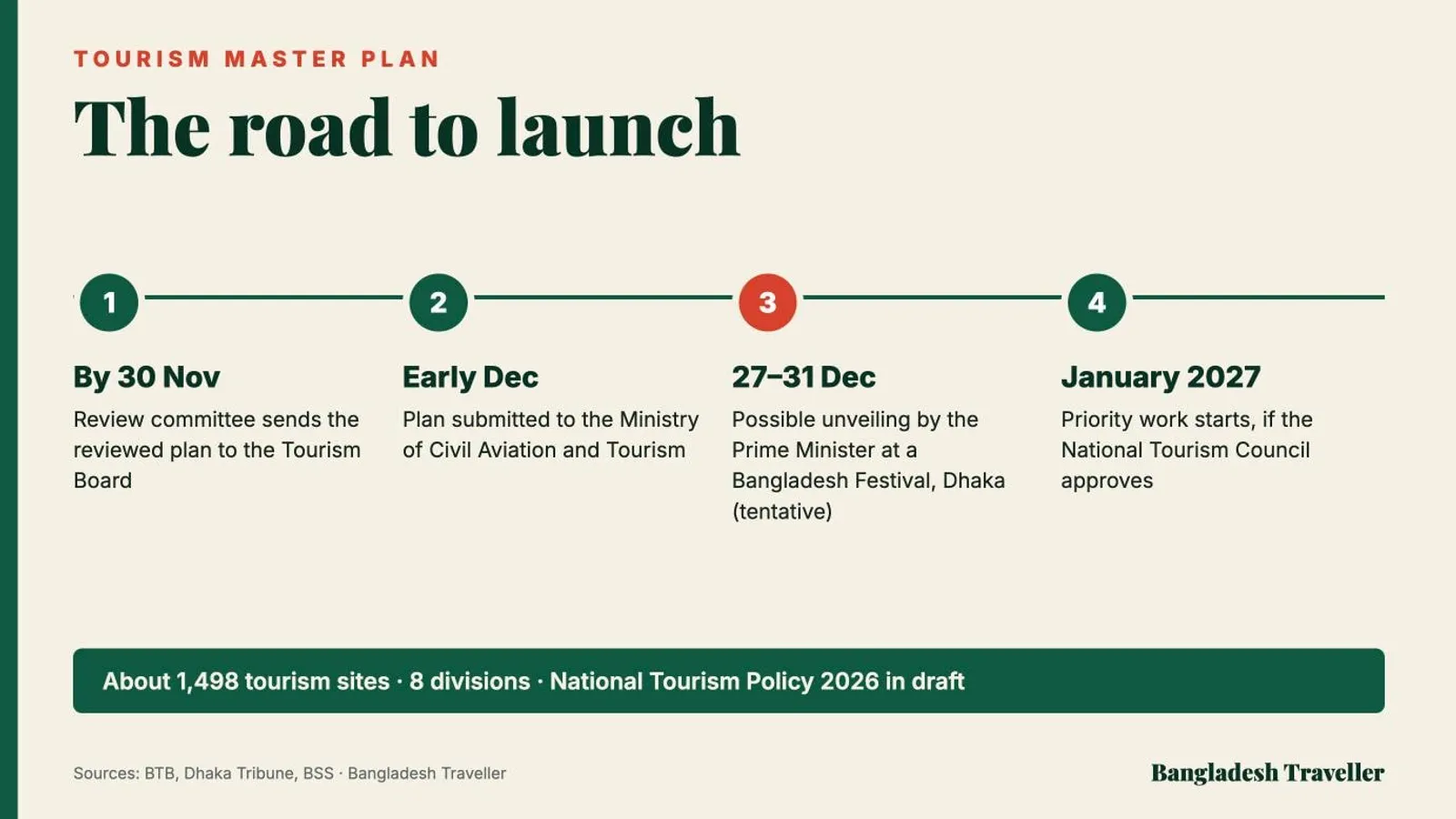
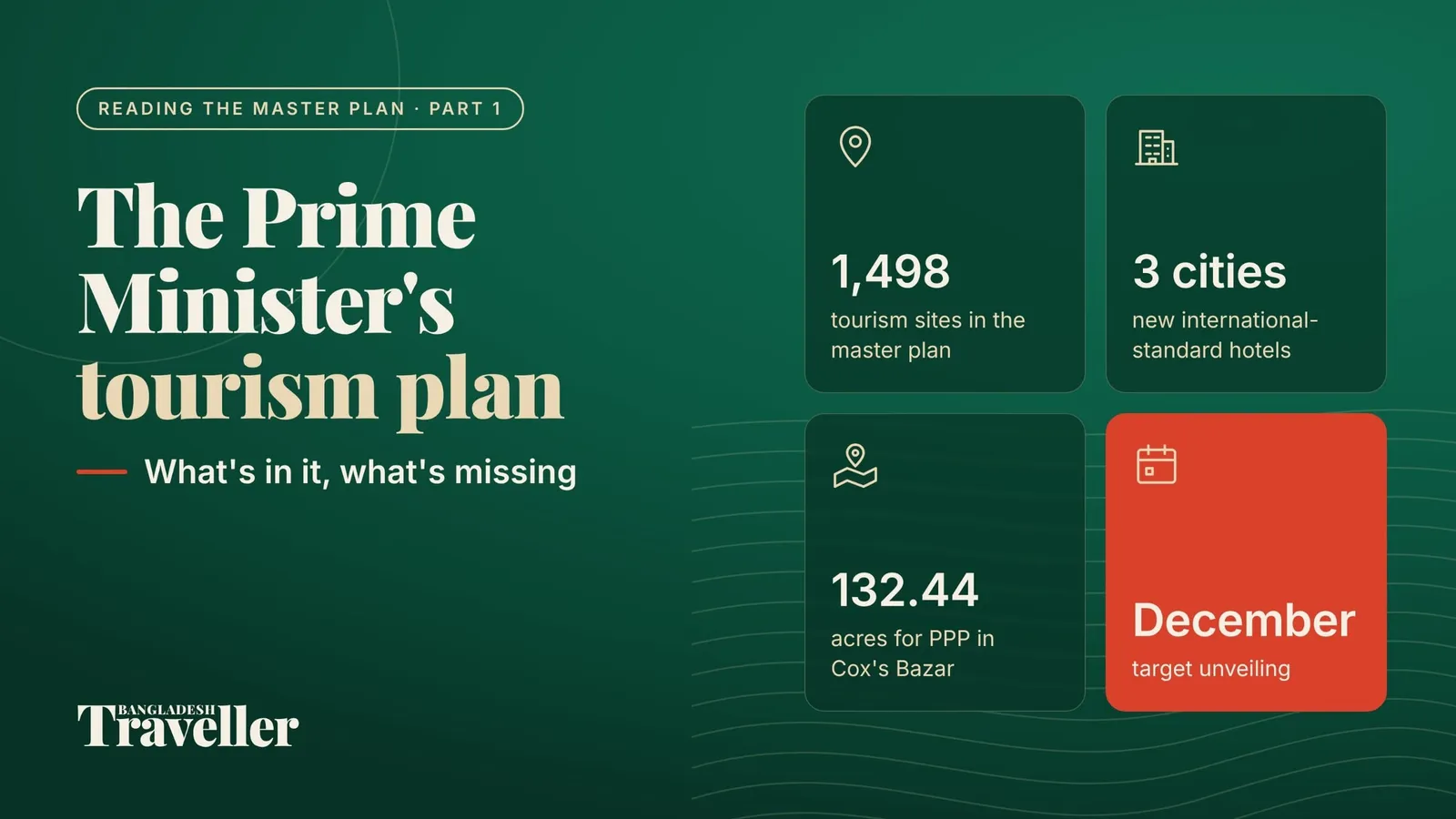
- Fit with the master plan. The policy and the government's tourism master plan, due at the ministry in early December, are being finished at the same time. They need to say the same thing.
For what the government said about the master plan this week, read Part 2 of our master plan series.
FAQ
What is the National Tourism Policy 2026?
A new national tourism policy drafted by the Ministry of Civil Aviation and Tourism and the Bangladesh Tourism Board to replace the 2010 policy. The draft was published on BTB's website on 19 November 2026.
When was the stakeholder workshop?
On 26 November 2026 at Hotel InterContinental Dhaka, to collect views before the draft is finalised.
Does the draft propose a new tourism fee?
Yes. It proposes a 1–2 percent "tourism promotion fee" on international air tickets, visas on arrival and star-hotel bills to fund a Tourism Development Fund.
Sources
- Bangladesh Tourism Board: Draft National Tourism Policy 2026, notice of 19 November 2026
- Participants' public posts on the stakeholder workshop of 26 November 2026
- BSS: Govt formulating 'National Tourism Policy 2026': Millat
- Dhaka Tribune: PM likely to unveil tourism master plan next month (13 November 2026)
Also available in Bangla: জাতীয় পর্যটন নীতিমালা ২০২৬-এর খসড়া: কর অবকাশ, পর্যটন ফি আর রাতের সাফারি